Introduction
The glass surface, which is mainly composed of silica, has a negative charge except in the strong acid region. It is known that when it is adsorbed with a cationic polyelectrolyte (polyethyleneimine, poly-L-lysine, etc.) having a different charge from its surface, a polymer adsorption layer having an opposite charge against the original surface is formed. Furthermore, when an anionic polyelectrolyte (sodium polystyrene sulfonate, sodium polyacrylate, etc.) is adsorbed on it, an adsorption layer with an opposite charge against the first one is formed. By using such a method, it is possible to stack polymer adsorption layers by alternately adsorbing two types of polyelectrolytes with different charges.
Until now, as a method for producing an organic thin film by the lamination method, the Langmuir-Blojet (LB) film method for forming a thin film by laminating a long-chain fatty acid formed at the air-water interface on a substrate is well known. On the other hand, the thin film obtained by laminating polymer electrolytes does not have molecular orientation, but it can withstand practical use because it is firmly bonded by the entanglement effect peculiar to polymers and strong electrostatic attraction. It has the advantage of having a high molecular weight. Another feature is that molecules and colloidal particles that selectively bind to the functional groups of the polyelectrolyte can be embedded in the laminated membrane after lamination. Due to these advantages, it is expected that it can be used in a wide range of industrial fields such as pharmaceuticals, pesticides, foods, and cosmetics, rather than LB membranes.
Experiments on the fabrication of laminated films of polymer electrolytes are often performed on latex and inorganic particles that can be used for colloidal science experimental methods such as zeta potential measurement and particle size measurement for analysis of the lamination process.1) However, in practice, it is ideal to try on a smooth substrate with a fixed area.
Therefore, in this study, polymer electrolytes with different charges were alternately adsorbed on a slide glass, and its zeta potential was measured by using the flat surface sample measurement method to confirm if the polyelectrolytes can be adsorbed alternately on the glass similar to its adsorption on particles and the adsorption conditions were examined.
Experiment
1) Experimental sample
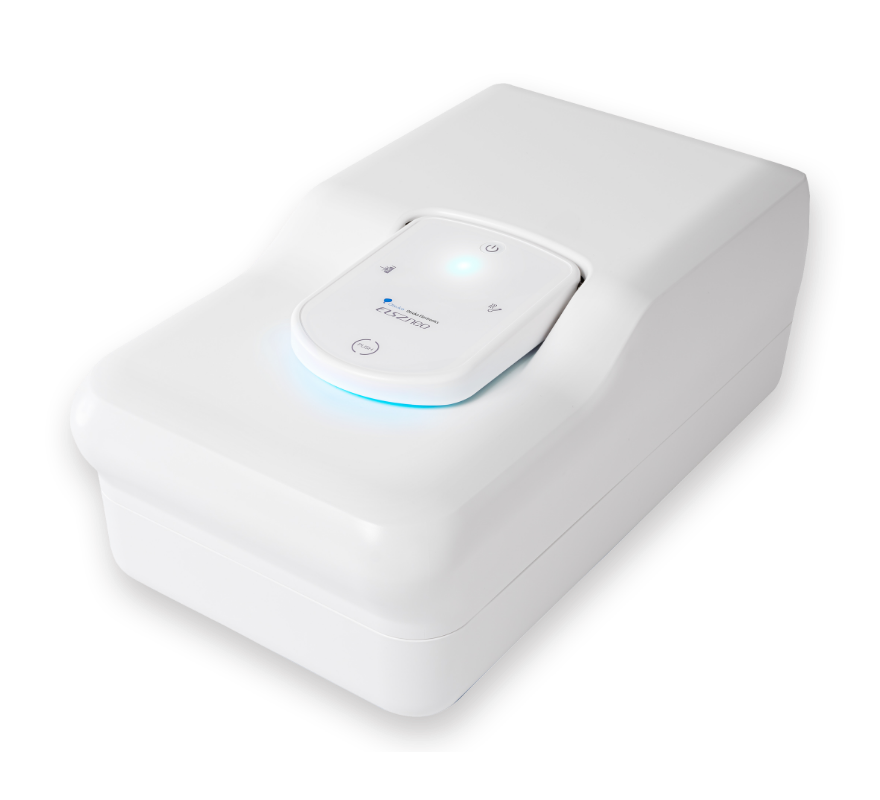
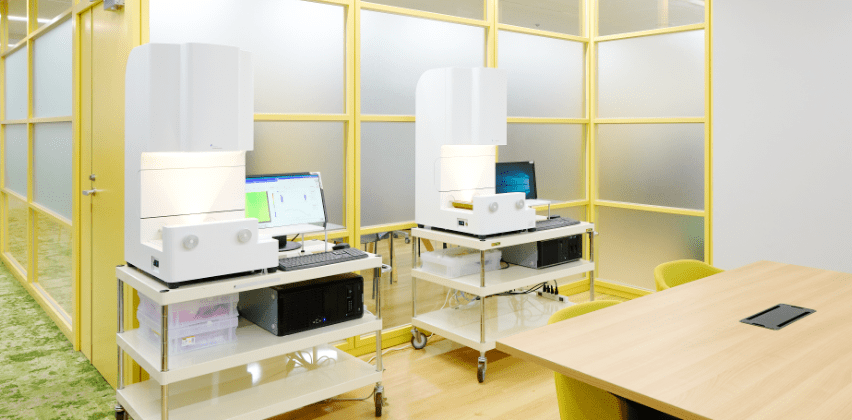
The cationic polyelectrolyte polyethyleneimine (manufactured by MP Biomedicals, Mw: 50,000 to 100,000) and the anionic polyelectrolyte polystyrene sodium sulfonate (manufactured by Aldrich, Mw: 75,000) were used. The Micro Slide Glass (manufactured by IWAKI) was used as the flat plate sample. The surface zeta potential was measured using Zeta potential / particle size measurement system ELSZ series manufactured by Otsuka Electronics Co., Ltd.
2) Experimental method
First, the surface zeta potential of slide glass was measured as a blank. After the slide glass was set in a flat surface cell unit, polystyrene latex, which was coated with hydroxypropyl cellulose so that the surface charge is almost zero, dispersed in a 10 mM NaCl solution was injected to the cell as monitor particles. Then they were electrophoresed and the apparent velocity distribution inside the cell was measured by the laser Doppler method. Since the particles can be approximated to zero charge, their velocity distribution represents the electroosmotic flow generated in the liquid in contact with the flat plate sample that has the potential on its surface. The surface zeta potential of the slide glass can be obtained by theoretically analyzing the apparent velocity distribution in the cell using Mori and Okamoto's equation2). Refer to the reference 3) for the details of the measurement method. Fig. 1. shows a photograph of the flat surface cell unit and its side view.
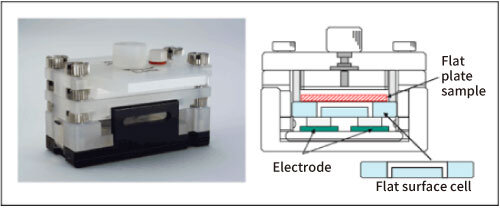 Fig. 1. Flat surface cell unit and its side view
Next, the slide glass was taken out, the surface was thoroughly washed with distilled water, soaked in a polyethylene imine aqueous solution having a concentration of 4 × 10⁻⁴ mol/L for an hour, then thoroughly washed with distilled water. The monitor particles were injected to the cell and the surface zeta potential of slide glass was measured in the same manner. Furthermore, the slide glass was taken out again, washed thoroughly with distilled water, then immersed in a sodium polystyrene sulfonate aqueous solution having a concentration of 4 × 10⁻⁴ mol/L for an hour, thoroughly washed with distilled water, the monitor particles were injected to the cell and the surface zeta potential of the slide glass was measured in the same manner.
In this way, the operation of alternately immersing in the cationic and anionic polyelectrolytes was repeated four times, and the surface zeta potential of the slide glass was measured each time.
Results and discussion
Fig. 2, 3, and 4 show an electroosmosis plot of the slide glass only, the slide glass immersed in an aqueous solution of polyethyleneimine, the slide glass immersed immersed in an aqueous solution of sodium polystyrene sulfonate, respectively. A slide glass is set at the bottom of each figure (the part marked -1). Each peak is approximated by a quadratic curve, and the intersection of the function and -1 is the surface zeta potential of the flat plate sample. However, since the code shown in the figure is the one seen from the particles being electrophoresed, the code of the flat plate sample is reversed. The electroosmosis plots in each case have different curve, which indicate different charge states on the glass slide surface.
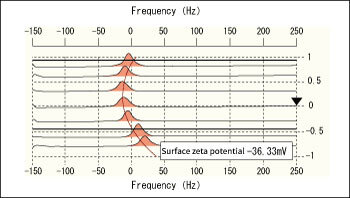 Fig. 2 Electro-osmosis plot of the slide glass
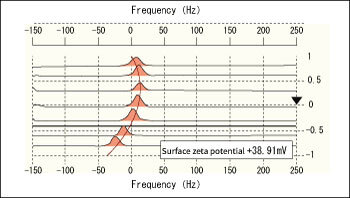 Fig. 3 Electro-osmosis plot of the slide glass immersed in an aqueous solution of polyethyleneimine
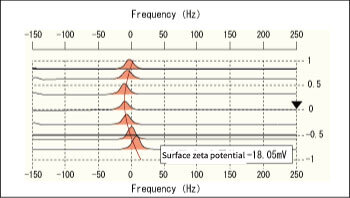 Fig. 4 Electro-osmosis plot of the slide glass immersed in an aqueous solution of sodium polystyrene sulfonate.
Fig. 5 shows the surface zeta potential of slide glass measured after being immersed in cationic and anionic polyelectrolytes alternately. The slide glass, which originally has a negative surface zeta potential, has a positive surface zeta potential when immersed in an aqueous solution of cationic polyelectrolyte polyethyleneimine, which indicates that the cation is adsorbed on the surface of the slide glass. After immersed in an aqueous solution of anionic polyelectrolyte polystyrene sulfonate, the surface has a negative potential. Even after the second repeated operations, the absolute value differs depending on the process, but the sign inversion of surface zeta potential is clearly observed.
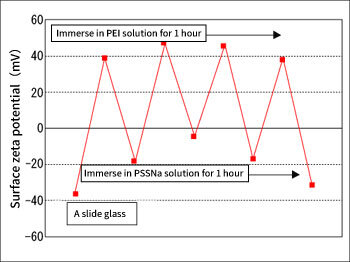 Fig. 5 Changes in surface zeta potential when polyelectrolytes are alternately adsorbed on a slide glass
The reversal of charge did not occur clearly after the second operations in such experiments until now although polyelectrolytes have often been continuously added by immersing in a cationic polyelectrolyte solution and then in an anionic polyelectrolyte solution in sequence. However, these results indicate that the reversal of charge sign can be clearly observed by performing a cleaning operation after immersing the slide glass in a cationic and anionic polyelectrolyte. It is considered that the free polyelectrolyte that was not adsorbed may have some effect on the surface zeta potential measurement without the cleaning operation.
Conclusion
This time, cationic and anionic polyelectrolytes were alternately adsorbed on the surface of a slide glass, then the conditions for forming a laminated film were examined by the evaluation of the surface zeta potential. As a result, it is considered that a laminated film is formed in multiple layers because the sign of surface zeta potential changes by thoroughly washing with distilled water to remove the unadsorbed polyelectrolyte after adsorbing the polyelectrolyte.
(Revised in September, 2022)